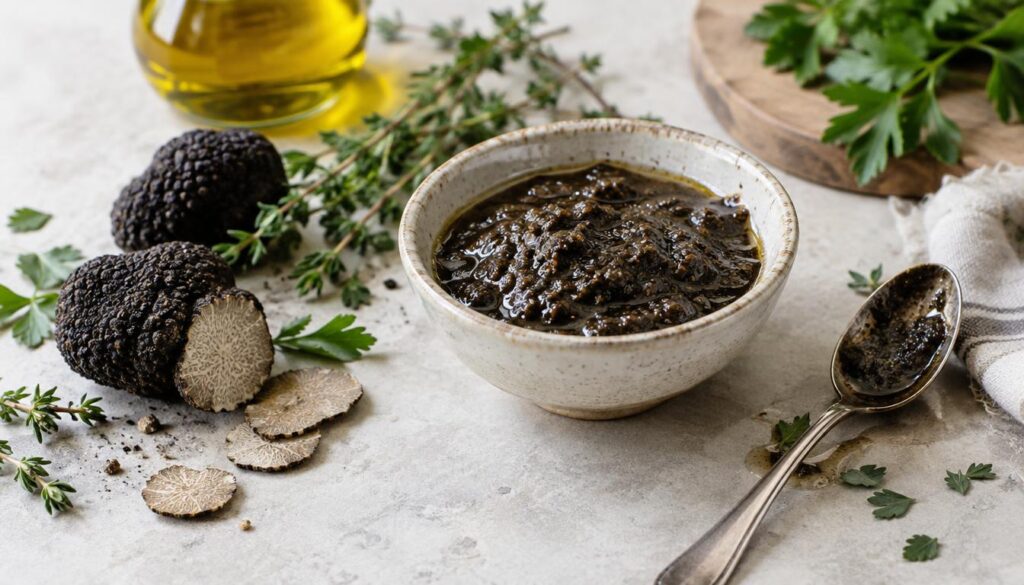
So, what is a truffle? In short, it’s a prized underground fungus prized by chefs and food lovers around the world for its intense aroma and singular flavour. These truffle fungi form close partnerships with tree roots, appear in distinct seasons and regions (think Périgord and Alba), and have shaped culinary traditions for centuries.
In this guide you’ll learn how truffles grow, why they’re so prized in cooking, the differences between fresh truffles and preserved truffle products, and practical tips for using them in the kitchen or choosing quality truffle powders. Whether you’re curious about fresh truffles for a special dish or want everyday truffle flavour, this guide covers the essentials.
What Are Truffles? Understanding These Extraordinary Fungi
Truffles are members of the fungi kingdom, most commonly classified in the genus Tuber. Unlike typical mushrooms, truffles grow entirely beneath the soil surface in close partnership with the roots of certain trees. This mycorrhizal relationship — where the fungus and tree exchange nutrients — is central to how truffles form and why they take years to establish.
In this symbiosis the fungus receives sugars made by the tree through photosynthesis, while the tree benefits from improved water and mineral uptake thanks to the fungal network in the soil. Typical host trees include oak, hazel and beech; the right combination of alkaline, well‑draining soil and compatible trees determines whether truffles will grow in a location.
Each truffle species produces a unique blend of volatile aromatic compounds in its flesh. These molecules generate the powerful, earthy aroma prized in cooking and also serve a biological purpose — attracting animals that dig up the truffle and help disperse its spores across the forest floor.
Are Truffles a Mushroom? Clarifying the Classification
Both truffles and mushrooms belong to the fungi kingdom, but they occupy different ecological niches. Mushrooms typically form above-ground fruiting bodies with caps and stems that release spores into the air. Truffles, by contrast, are subterranean, compact fruiting bodies that rely on animals rather than wind for spore dispersal.
Mushroom Characteristics
- Visible above ground with cap and stem
- Use gills or pores for spore release into the air
- Often grow and spread quickly in suitable conditions
- Can be cultivated in controlled environments more easily
- Tend to rely on wind and rain for dispersal
Truffle Characteristics
- Develop entirely underground near tree roots
- Dense, solid bodies (no stems or caps)
- Depend on animals to locate and disperse spores
- Require years to mature and specific soil/tree partnerships
- Demand precise climate and soil chemistry (often alkaline)
Because truffles grow underground and require compatible host trees and suitable soil, cultivating them is a long‑term agricultural project rather than a quick harvest. If you want to read more on cultivation, see the sections on where truffles come from and on growing truffles in this guide.
What is a Truffle Made Of? Composition and Structure
At a glance, a truffle is dense fungal tissue — not the cap-and-stem structure of ordinary mushrooms — which gives it a firm weighty texture and concentrated flavour. The body of the truffle is solid throughout, which is why thin shavings carry so much aroma and taste in a single bite.
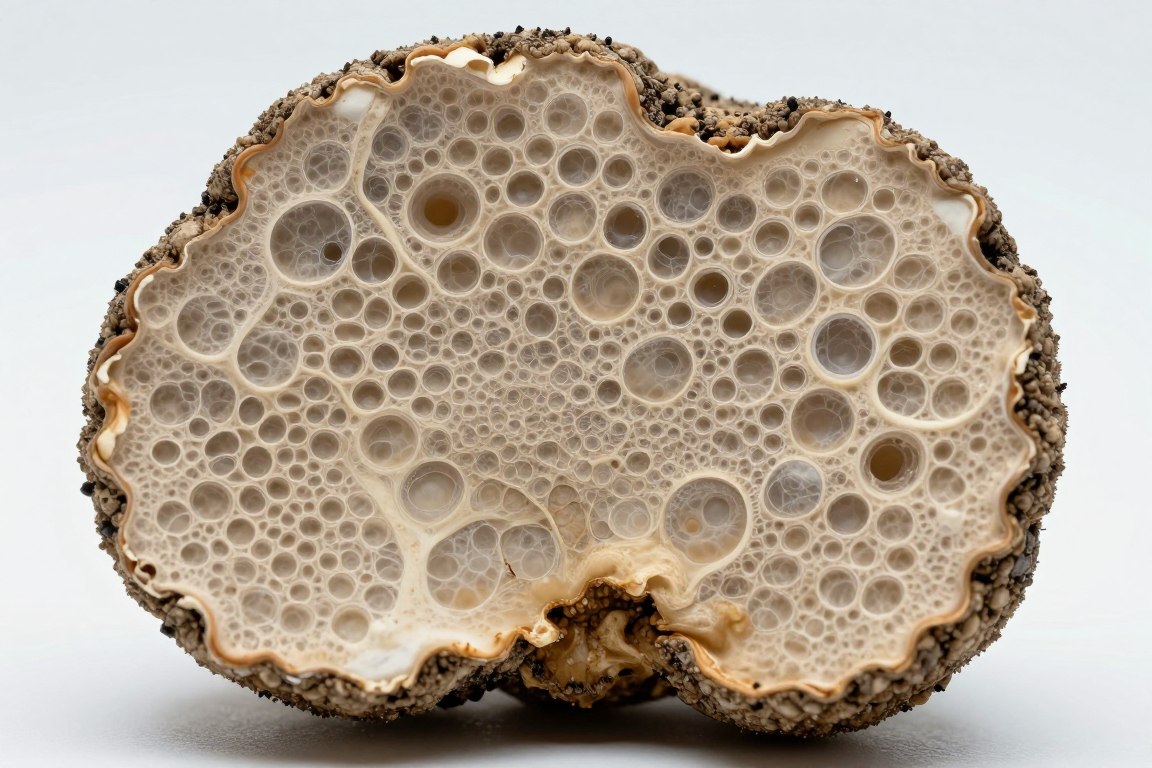
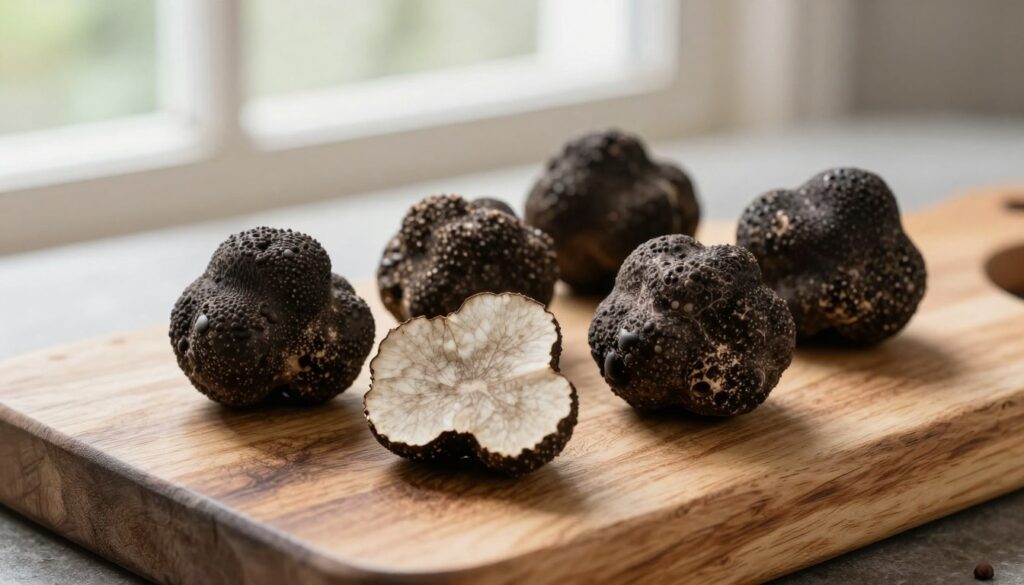
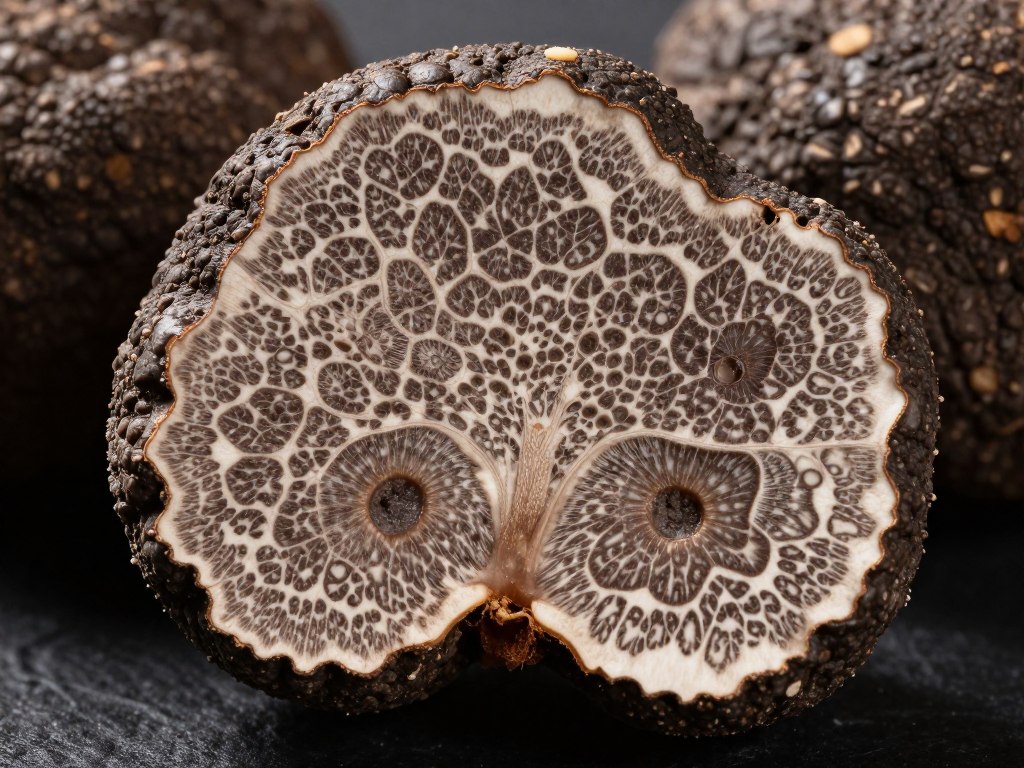
The outer skin, called the peridium, protects the truffle while the interior — the gleba — contains the spore-bearing tissue. Black truffles usually have a rough, warty peridium and a dark, marbled gleba; white truffles tend to be paler with a smoother surface. These visual differences help identify types and maturity at a glance.
Chemically, truffles produce a complex mixture of volatile compounds that create their powerful aroma. Compounds such as dimethyl sulphide contribute earthy notes, while others (for example bis(methylthio)methane in some white truffles) produce garlic- or onion-like top notes. Different combinations of alcohols, ketones and aldehydes give each truffle type its signature scent profile.
The Science Behind Truffle Aroma
As a truffle matures underground, enzymes break down proteins and lipids and release volatile molecules that become stronger with ripeness. These aromatic compounds serve a biological purpose — they attract animals that locate and dig up truffles, helping disperse spores — and a culinary one, since chefs prize the same scent for its ability to transform simple dishes.
Fresh truffles emit these volatiles continuously, which explains their short usable life: aroma intensity and moisture fall quickly after harvest. For practical cooking, use fresh truffles within days (see FAQ for storage tips), or preserve their character with specialist methods such as freeze-drying to retain aroma in truffle powders.
Why Do You Need Pigs to Find Truffles? The Art of Truffle Hunting
Truffle hunting is a centuries‑old practice that pairs human knowledge with animal scent detection. Historically, pigs were prized for finding truffles because certain truffle aromas resemble compounds found in boar saliva, which can trigger a sow’s foraging instincts. Their natural ability to detect these underground fungi made them effective — if sometimes impractical — harvest partners.
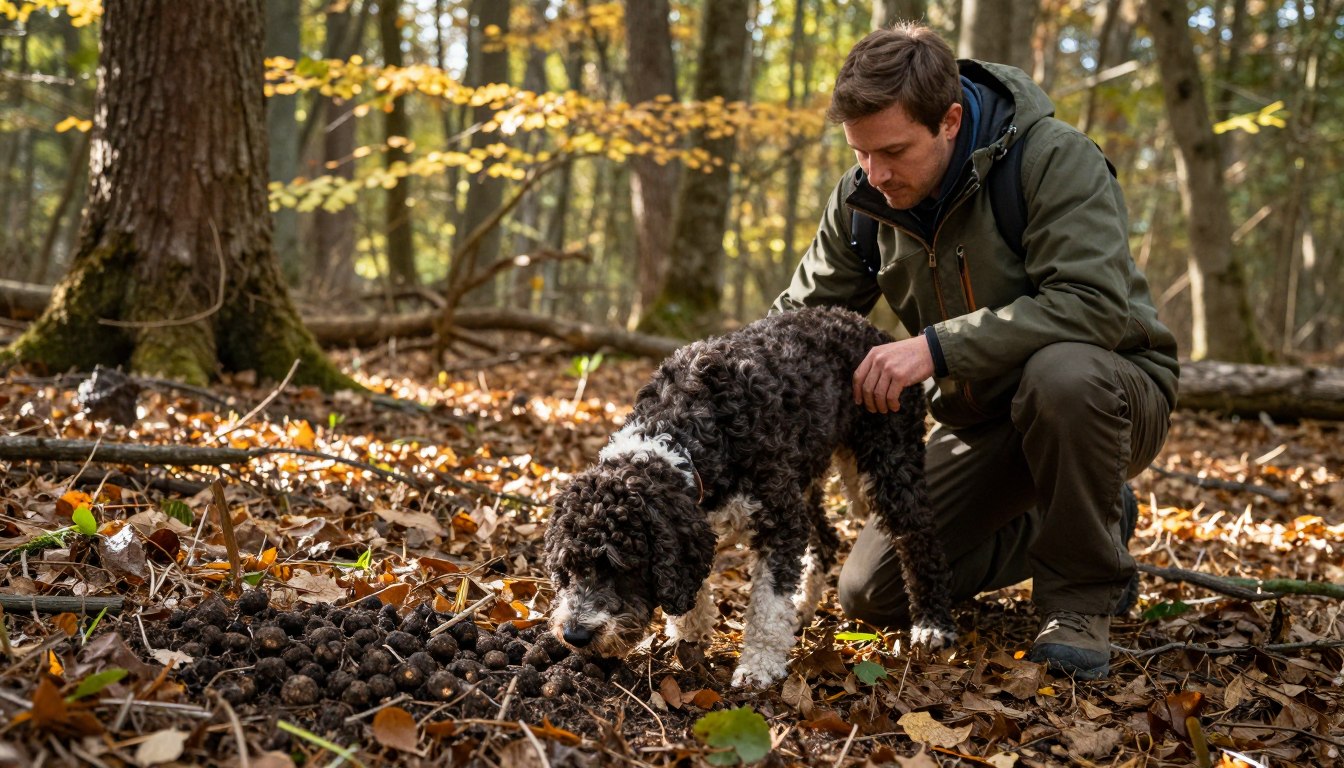
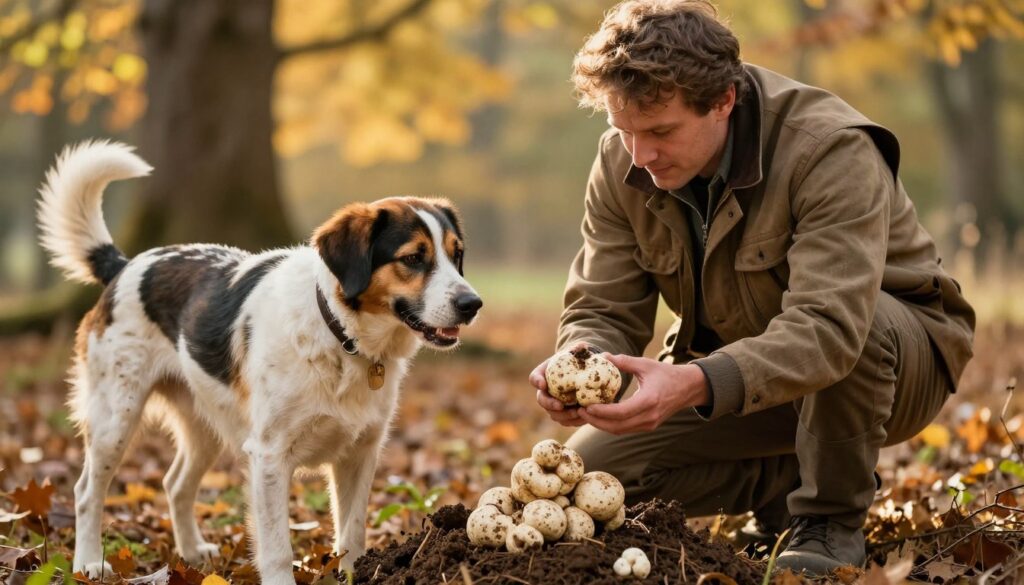
In practice, pigs present drawbacks: they often try to eat the truffles they find, can be hard to control in woodland terrain and risk damaging the soil and root networks. For these reasons the commercial truffle industry has largely moved to using dogs, which indicate finds without consuming them and are easier to manage in diverse terrain.
Modern Truffle Hunting with Dogs
Specially trained dogs — notably the Lagotto Romagnolo among others — are now standard in professional truffle hunting. Training takes months and relies on positive reinforcement: handlers introduce the truffle scent, reward the dog for correct signalling, and teach a gentle alert that doesn’t disturb the soil.
- Introduce scent: teach the dog to recognise truffle aroma using samples and rewards.
- Indicate, don’t dig: train the dog to sit or paw lightly rather than uproot the site.
- Controlled excavation: handler digs carefully to protect the mycorrhizal network and the host tree roots.
Expert dogs can detect mature truffles at depth (often several tens of centimetres), allowing handlers to excavate precisely and minimise disturbance. Sustainable harvesting practices — such as careful digging, replacing soil and avoiding damage to host trees — help protect truffle populations for future seasons.
Traditional Pig Hunting
- Strong natural attraction to truffle compounds
- Excellent scent detection
- Tendency to eat finds and disturb sites
- Difficult to transport and control
- Mostly of historical interest today
Modern Dog Hunting
- Trained specifically for truffle detection
- Indicate without consuming truffles
- Easier to handle in varied terrain
- Enable more careful, sustainable harvesting
- Preferred method for commercial operations
Beyond animals, successful truffle hunting depends on human expertise: recognising suitable trees (oak, hazel, beech), reading soil conditions and timing hunts to the season. Combined, these skills make truffle hunting as much an art as a science.
Types of Truffles and When They Are in Season
The truffle world includes several distinct species, each with its own season, aroma profile and best culinary uses. Knowing the main types helps explain why some truffles are exceptionally expensive while others offer a more affordable way to enjoy genuine truffle flavour. Regional soil and tree partnerships play a major role in a truffle’s character.
Black Périgord Truffle (Tuber melanosporum)
The Black Périgord (Tuber melanosporum) is one of the most celebrated black truffles. It develops a dark, warty exterior and intensely aromatic flesh in winter, typically from December through March. These truffles favour limestone-rich soils beneath oak and hazel trees in France, Spain and Italy.
At peak winter ripeness their earthy, chocolatey notes deepen—qualities chefs prize in sauces, pasta and risotto. Quick recipe idea: shave a little over buttered tagliolini or finish a creamy mushroom risotto to let the black truffle complement rather than overpower the dish.
White Alba Truffle (Tuber magnatum)
The White Alba truffle (Tuber magnatum) from Piedmont, Italy, is widely regarded as the most prized white truffle. Appearing from October to December, these pale truffles give powerful, pungent aromas—garlic, earth and honey notes—that command the highest market prices.
White Alba truffles are notably rare and difficult to cultivate, which is why they often fetch £2,000–£6,000 per kilogram in strong seasons. Culinary tip: use raw—shave thinly over simple dishes such as tagliolini al burro or scrambled eggs so the volatile aromas remain intact.
Summer Truffle (Tuber aestivum)
Summer truffles (Tuber aestivum) arrive from May to September and provide an accessible way to enjoy authentic truffle flavour. They have black skins but paler, hazelnut-coloured flesh and a milder aroma than winter varieties.
Because they are more widely available across Europe and have a longer season, summer truffles are priced more affordably (roughly £200–£400/kg historically). They work well shaved raw on salads, pasta and lighter dishes where a subtle truffle note is desired.
Burgundy Truffle (Tuber uncinatum)
Burgundy truffles (Tuber uncinatum) are closely related to summer types but mature later in the year, typically from September through January. They develop darker flesh and a stronger aroma than summer truffles, offering a mid-point between mild and intense varieties.
Burgundy specimens are found across Central Europe, including France and the United Kingdom. Try them in autumnal dishes—roasted root vegetables or creamy polentas benefit from their deeper aroma.
| Truffle Type | Season | Primary Regions | Price Range | Aroma Intensity |
| Black Périgord | December – March | France, Spain, Italy | £800-£1,500/kg | Strong |
| White Alba | October – December | Northern Italy, Croatia | £2,000-£6,000/kg | Very Strong |
| Summer Truffle | May – September | France, Italy, Spain, UK | £200-£400/kg | Mild |
| Burgundy Truffle | September – January | France, Central Europe | £400-£700/kg | Moderate |
Note on prices: these ranges are market-dependent and fluctuate with seasonal yields and weather. Seasonality affects availability and price—fresh truffles remain luxury items, which is why preservation methods and premium truffle products have become popular for year-round cooking.
Year-Round Truffle Excellence: The Premium Powder Alternative
Fresh truffles deliver extraordinary flavour but come with practical limits: a short usable life, seasonal availability and price volatility. Fresh truffles typically lose moisture and aroma within days in the fridge, which makes them tricky to store and budget for. For cooks who want authentic truffle character without these constraints, premium preserved products offer a reliable alternative.
High-quality truffle powders use freeze-drying to capture and concentrate the volatile compounds that create truffle aroma and flavour. This process preserves the character of the truffle while extending shelf life, so you can enjoy genuine truffle aroma year-round without relying on fresh truffles or synthetic flavourings.
Understanding Truffle Powder Quality Standards
Not all truffle powders are equal. Many mass-market products contain only trace real truffle with the rest made up of fillers and artificial aromatics. By contrast, premium powders start with higher proportions of fresh truffle; for example, formulations using 3% fresh material typically concentrate to around 15% truffle content after freeze‑drying, delivering authentic aroma without additives.
When choosing a powder look for clear labelling of truffle content, an absence of artificial flavourings, and transparent provenance. These factors determine whether a product will give you the nuanced, layered aroma chefs expect or a one‑dimensional imitation.
Black Truffle Powder: Everyday Luxury
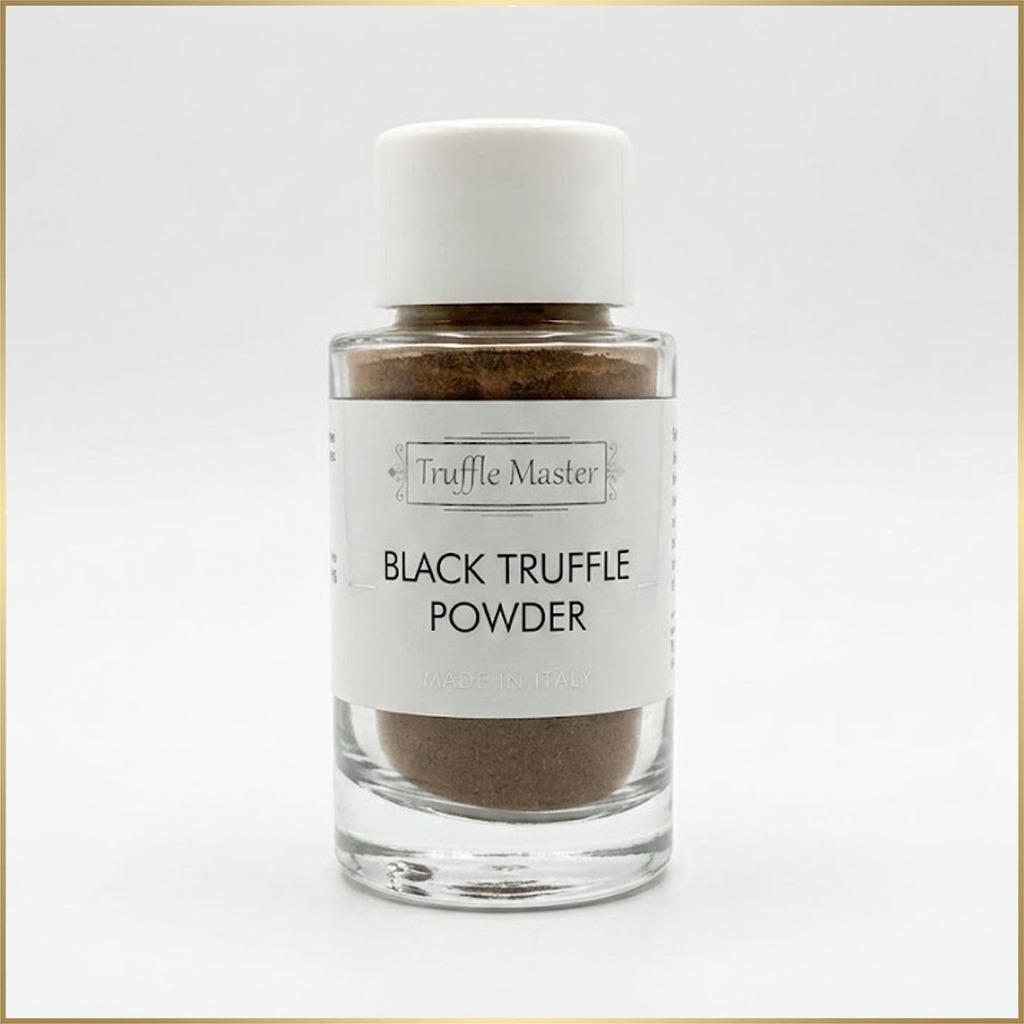
Black truffle powder captures the deep, umami-rich notes of black truffles in a convenient, shelf-stable form. Small-batch production and careful freeze-drying preserve robust earthy flavours ideal for finishing dishes.
- Key benefits: 15% concentrated truffle equivalent (after freeze-drying), 1–2 year shelf life, no artificial additives.
- Perfect for: pasta tossed with butter, scrambled eggs, risotto finishing.
- Usage: a pinch (≈0.5–1g) per serving provides powerful aroma—use sparingly and adjust to taste.
White Truffle Powder: Accessible Luxury
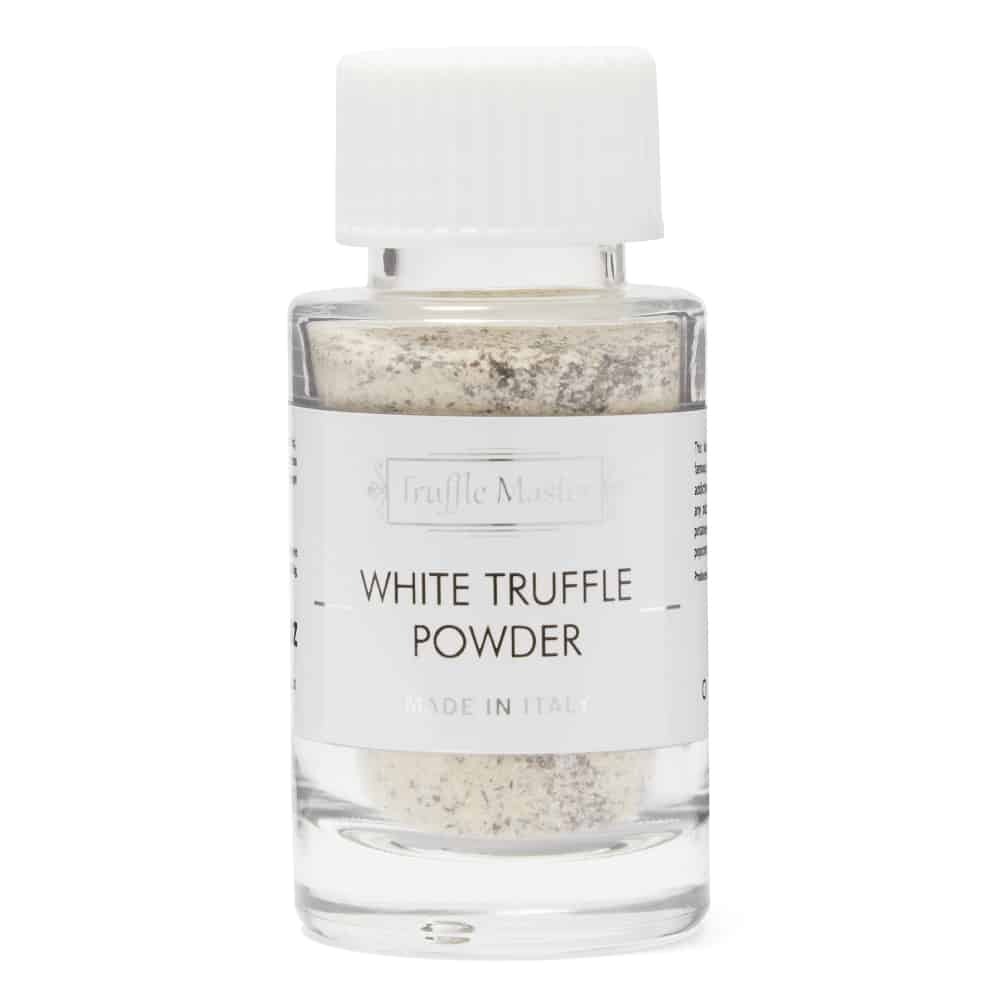
White truffle powder preserves the bright, pungent aromatics of Alba-style whites while removing the urgency of fresh truffle use. The freeze-dried format lets you add distinctive garlicky–honeyed notes to dishes all year round.
- Key benefits: 15% concentrated white truffle equivalent (after freeze-drying), extended shelf life, natural formulation.
- Perfect for: finishing tagliolini, eggs, creamy polenta or simple canapés.
- Usage: a tiny pinch (≈0.5g) releases powerful aroma—apply just before serving.
By preserving rare white truffle character in a stable format, white truffle powder democratises a flavour traditionally reserved for rare, expensive fresh specimens.
Premium Powder Advantages
- 1-2 year shelf life maintains quality
- Year-round availability regardless of season
- Consistent pricing unaffected by harvest
- Portable for dining out experiences
- Concentrated flavour requires minimal quantity
- 15% truffle content after freeze-drying
- Black truffle powder is suitable for vegetarians and vegans
- No carrier ingredients needed
Fresh Truffle Limitations
- Maximum 10-day refrigerator life
- Seasonal availability only
- Price volatility with yearly harvests
- Requires immediate consumption
- Daily moisture and weight loss
- Expensive initial investment
- Limited to omnivore diets
- Tastes bland without carriers
Premium truffle powders offer a practical balance between authenticity and convenience. For regular cooks they represent better value per usable portion than fresh truffles, reduce waste and bring true truffle aroma into everyday cooking—whether dusted over pasta, stirred into sauces or used as a thoughtful gourmet gift.
Where Do Truffles Come From? Global Truffle Regions
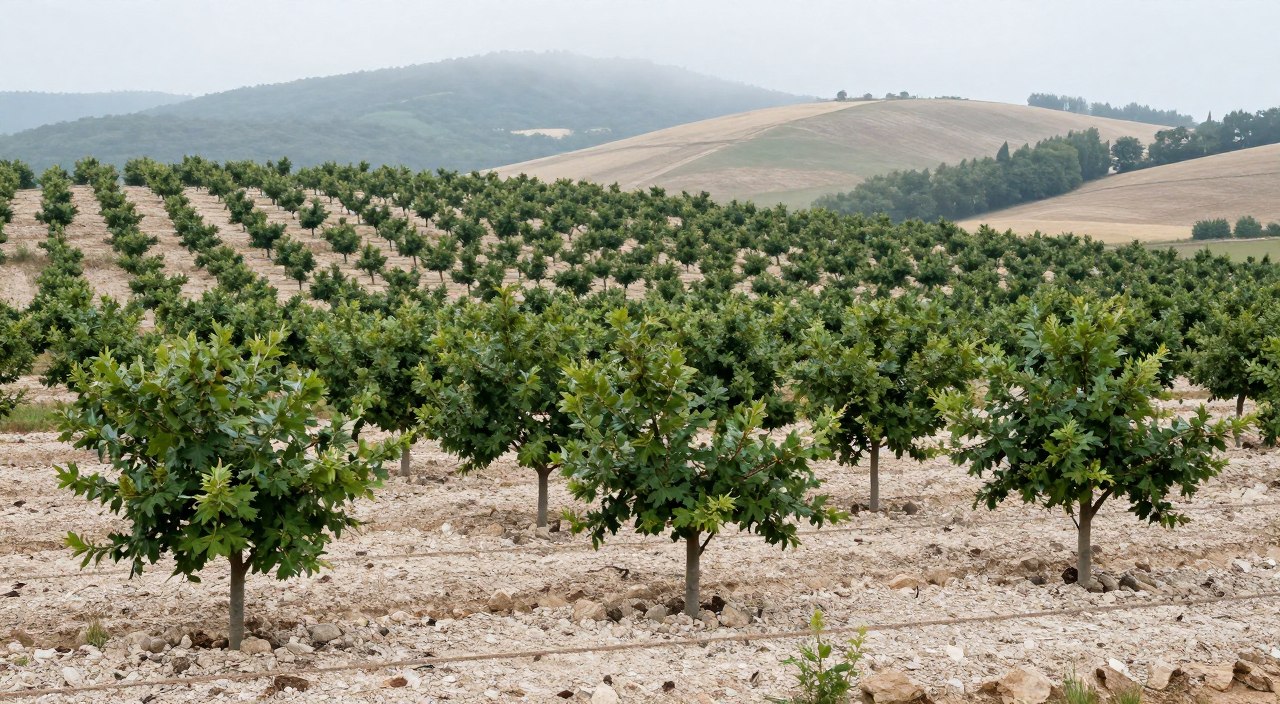
Truffles grow where climate, soil chemistry and compatible trees coincide: typically Mediterranean‑style climates, alkaline (limestone) soils and established deciduous woodlands. These specific conditions explain why truffles are concentrated in particular regions around the world and why cultivation requires careful site selection.
France: The Truffle Heartland
France remains synonymous with black Périgord truffles (Tuber melanosporum). Regions such as Périgord and Provence feature limestone plateaus and centuries‑old oak forests that create ideal habitat. Local markets—most notably Richerenches in Vaucluse—continue to attract buyers and hunters during the winter season, sustaining long‑standing regional traditions.
Italy: Alba and Beyond
Italy is famed for white truffles from Alba (Tuber magnatum) and for significant black truffle production in Umbria. The Langhe and Piedmont hills are the centre of white‑truffle culture; Alba’s autumn fair draws international buyers seeking prized specimens. Umbrian areas such as Norcia and Spoleto are noted for black truffles and summer varieties.
Spain: Emerging Truffle Power
Spain has invested heavily in truffle cultivation and now produces substantial yields, particularly in Aragon, Castilla‑La‑Mancha and Catalonia. Areas like Sarrión in Teruel have become important production centres thanks to large-scale planting of inoculated trees and modern farming techniques that complement traditional wild harvesting.
Traditional Truffle Countries
- France – Périgord black truffles (Tuber melanosporum)
- Italy – Alba white truffles (Tuber magnatum) and Umbrian black
- Spain – Aragon and Catalonia production
- Croatia – Istrian white and black varieties
Emerging Truffle Regions
- Australia – successful Périgord cultivation (Tasmania, WA)
- New Zealand – winter harvests for southern markets
- United States – Oregon and Pacific Northwest initiatives
- United Kingdom – Burgundy and summer types in southern England
Australia and New Zealand: Southern Hemisphere Success
Australia and New Zealand grow Périgord‑type truffles commercially, with harvests occurring during the Northern Hemisphere summer. This counter‑seasonal supply is valuable to restaurants and markets in Europe, offering fresh truffles when European production is dormant—though overall volumes remain smaller than the Old World heartlands.
For would‑be growers: successful truffle cultivation depends on choosing inoculated trees, ensuring alkaline, well‑draining soil, and accepting a 5–10 year patience window before first production—see the cultivation sections of this guide for detailed steps and considerations.
Can You Find Truffles in the UK? British Truffle Heritage
The UK does produce truffles — a proud but often overlooked heritage alongside Continental varieties. Several species grow wild, especially in southern England, and historical records show truffle hunting and local markets dating back centuries.
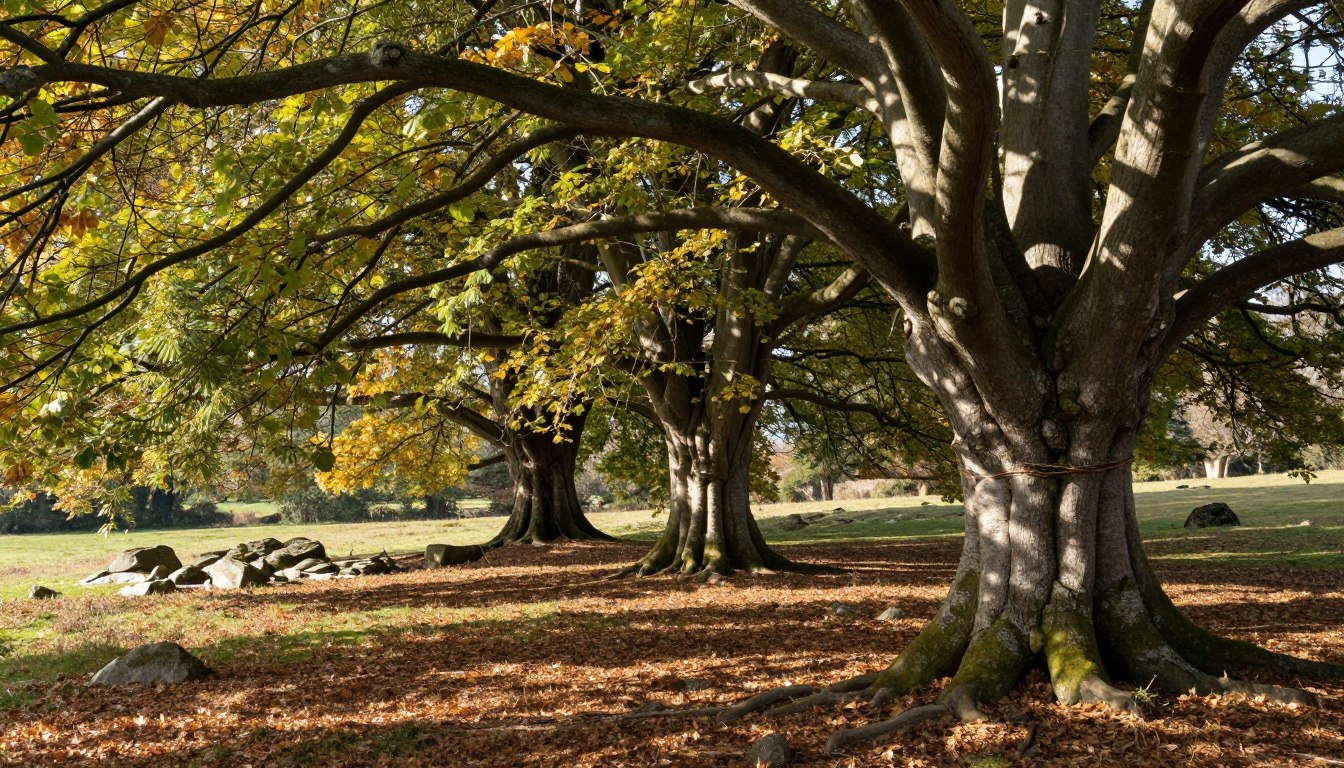
Summer truffles (Tuber aestivum) are the most widespread British type, typically found beneath beech, oak and hazel trees across southern counties. Burgundy truffles also occur in the UK, with Hampshire, Wiltshire and the Chilterns among the better-known areas. These homegrown truffles develop the same characteristics as their Continental cousins and provide genuine British truffle experiences.
The Decline and Revival — A Short Timeline
- Decline: 20th-century agricultural change and lost local knowledge reduced suitable habitat and discouraged hunting.
- Rediscovery: Enthusiasts and researchers identified historical sites and proved truffles still grow in Britain.
- Revival: Training programmes, organisations and landowners began cultivating inoculated trees and teaching sustainable hunting.
British Truffle Cultivation Projects
Commercial truffle orchards now exist in Britain, with growers planting trees inoculated with species such as Tuber aestivum and, in some cases, Tuber melanosporum where site conditions permit. Cultivation requires alkaline, well‑draining soil and patience — expect a 5–10 year wait before first production. Early results from some orchards are promising, and local chefs increasingly champion British truffles.
Despite this revival, UK production remains modest compared with Mediterranean countries, so many consumers still rely on imported fresh truffles or preserved truffle products. For those interested in getting involved locally, look for accredited courses, organised hunts run by groups or regulated events — and always respect landowner permissions and conservation rules when foraging.
Are Truffles Good for You? Nutritional and Health Benefits
Yes — truffles are nutritious, but typical serving sizes are small. As a fungus, a truffle delivers concentrated flavour alongside useful nutrients, making it a valuable addition to balanced cooking rather than a primary nutrition source.
Nutritional Composition of Truffles
Truffles contain a higher-than-average protein content for fungi and provide all essential amino acids, together with dietary fibre and low levels of fat and calories. While a 100g portion is far larger than normally consumed, analyses show truffles also include micronutrients such as vitamin C, B‑complex vitamins (riboflavin, niacin), vitamin D and minerals like iron, magnesium, manganese and phosphorus.
Antioxidant Properties and Bioactive Compounds
Truffles are rich in antioxidant compounds such as polyphenols and phenolic acids; these molecules can help neutralise oxidative stress in laboratory studies. Some research also reports antimicrobial activity for truffle extracts and potential anti‑inflammatory effects, although these findings are preliminary and should be presented cautiously in consumer-facing copy.
Truffle Health Benefits
- Good source of complete protein and amino acids
- Contain antioxidants that may combat oxidative stress
- Low in calories — useful for flavouring low‑calorie dishes
- Provide dietary fibre to support digestion
- Contain vitamins and minerals in modest amounts
- May offer mild anti‑inflammatory properties (research ongoing)
- Support immune health through micronutrients and bioactives
- Suitable for vegetarian and vegan diets (pure fungal origin)
Considerations
- High cost restricts regular consumption
- Typical servings are small, so nutritional impact is modest
- Some individuals may experience digestive sensitivity
- Rare allergic reactions are possible
- Strong aroma may be overpowering for some palates
- Availability varies by season and region
Truffles in Balanced Nutrition
Because cooks use truffles in small quantities — a few grams of fresh truffle or a pinch of concentrated powder — they contribute modestly to daily nutrient intake but provide significant flavour, helping make simple, healthy dishes feel indulgent. Try dusting a pinch of truffle powder over steamed vegetables or a light scrambled egg to add umami without adding many calories.
Both fresh truffles and premium truffle products preserve many beneficial compounds when handled correctly. Freeze‑dried truffle powders retain aromatic molecules and concentrate flavours while maintaining much of the original bioactive profile, making them a practical way to enjoy truffle benefits year‑round.
As fungi, truffles are plant‑free and therefore appropriate for vegetarian and vegan kitchens seeking natural, umami‑rich ingredients without animal derivatives — a genuine product option for those prioritising minimally processed foods.
Using Truffles in Your Kitchen: Practical Culinary Guide
To get the most from truffles in your kitchen, focus on simple dishes and thoughtful handling. Truffles and truffle products reward restraint: a little goes a long way, turning basic pasta, eggs or risotto into memorable dishes without complicated techniques.
Best Dishes and Pairings for Truffle
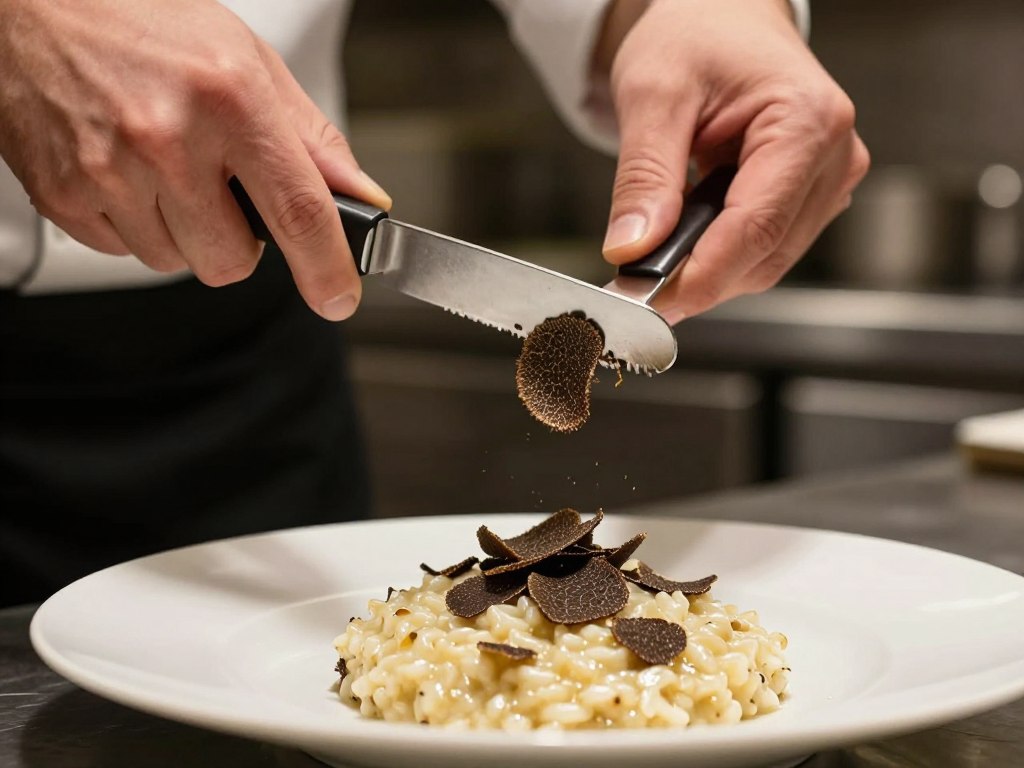
Truffles pair best with fatty, mildly flavoured ingredients that carry aroma—eggs, buttered pasta and creamy risottos are classic canvases. The fat in egg yolks, butter or cream absorbs truffle compounds and distributes flavour across the dish, so keep preparations simple to let the truffle shine.
Quick recipe micro-guides:
- Eggs (scrambled): whisk eggs with a splash of cream, cook gently over low heat, finish with a pat of butter and shave 5–10g fresh truffle per serving (or a pinch of powder) just before serving.
- Pasta (tagliolini al burro): toss hot tagliolini with butter and a little pasta water, plate, and shave fresh truffle over the top; finish with a light dusting of truffle powder if desired.
- Risotto: make a simple parmesan risotto, finish off the heat with butter and cheese, then shave truffle thinly so the volatile aromas aren’t lost to cooking.
Application Techniques for Maximum Impact
Handle fresh truffles carefully: store wrapped in a clean paper towel inside a sealed container in the fridge, change the towel daily to manage moisture, and use specimens within a few days for best aroma. For serving, shave truffles thinly with a truffle slicer and add them to warm dishes just before plating.
Heat sensitivity varies by type: white truffles are best served raw—never cooked—as their volatile compounds dissipate with heat. Black truffles tolerate gentle warming and may benefit from a brief warm finish to release aromatic oils.
Ideal Truffle Companions
- Eggs and dairy products
- Pasta with butter or cream
- Risotto and rice dishes
- Potatoes (mashed, roast, gratin)
- Mild cheeses
- Poultry and delicate game
- Lightly cooked delicate fish
Avoid Pairing With
- Strongly spiced or heavily smoked dishes
- Acidic tomato sauces
- Sweet desserts
- Overly garlicky preparations that compete with truffle aroma
- Strong vinegar dressings or intense chilli heat
Premium Truffle Powder Applications
Quality truffle powders offer versatility and economy—because they’re concentrated, a pinch (about 0.5–1g) can equal the aroma impact of several grams of fresh truffle. Use powder as you would fresh truffle: sprinkle over finished dishes, or mix into warm sauces at the last moment so the heat releases the aroma.
Ideas for everyday use: dust scrambled eggs for a gourmet breakfast, sprinkle over popcorn for an elevated snack, finish roasted vegetables with a light dusting, or keep a small jar in your bag to personalise restaurant dishes discreetly.
Dos and don’ts quick checklist: do use sparingly; do add truffle raw or at the finish; don’t overpower with competing flavours; don’t cook white truffle. When used thoughtfully, both fresh truffles and premium powders transform simple dishes into special occasions.
Understanding Truffle Pricing and Market Dynamics
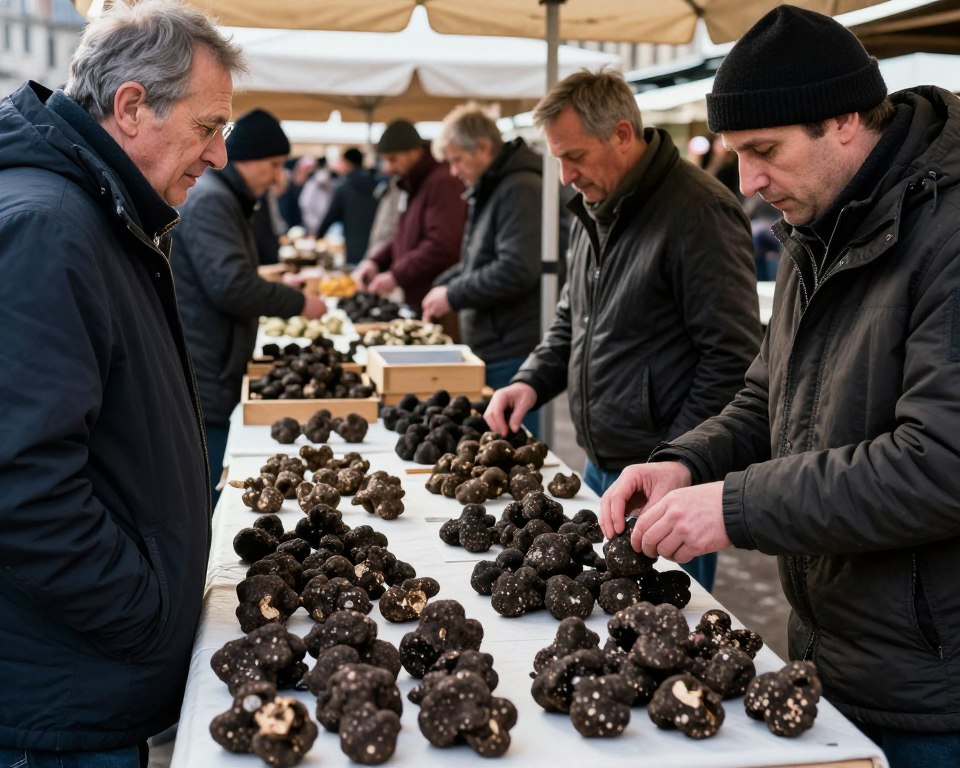
Truffle prices reflect a mix of rarity, seasonality, harvest success and global demand. Because yields vary year to year, the market is volatile — good seasons push prices down, poor seasons send them up — so understanding the key factors helps you spot real value versus inflated claims.
Factors Influencing Truffle Prices
Weather is pivotal: drought or excessive rain can sharply reduce yields and push prices higher. Species also matters — white Alba truffles are typically the most expensive because they are rarer and are not reliably cultivated, while black Périgord truffles are farmed more widely. Summer truffles are the most affordable of the common European types, offering authentic truffle flavour at lower cost.
The Value Proposition of Premium Truffle Products
Fresh truffles carry inherent waste and timing costs. They lose moisture and aroma quickly, so consumers need to use them fast or risk loss of value. Furthermore, to reach a desired aroma intensity chefs often need several grams of fresh truffle, increasing cost per usable portion.
Premium truffle powders change the equation: freeze‑drying concentrates aroma and extends shelf life (typically 1–2 years), reducing waste and making pricing more predictable. Because a concentrated powder delivers aroma in much smaller quantities, the price per usable portion can be lower than buying fresh truffle repeatedly throughout the year.
When evaluating value, compare price per usable portion rather than headline price per kilogram. Check product labelling for truffle content, whether the product is freeze‑dried or artificially flavoured, and provenance — these details determine real culinary and economic value.
Value comparison example: a 50g jar of premium powder labelled as 15% truffle content effectively contains 7.5g of concentrated truffle equivalent. Because the powder seasons many dishes in tiny amounts, that concentrate can season dozens of servings — a practical perspective when comparing to fresh truffle purchases that degrade within days.
How to Compare Offers — Quick Checklist
- Price per usable portion: account for concentration and typical serving sizes (powder pinch vs grams of fresh truffle).
- Shelf life and waste: longer shelf life reduces spoilage and unexpected cost.
- Ingredient transparency: look for clear truffle % and absence of synthetic flavourings.
- Provenance: region and species influence aroma; reliable suppliers publish origin details.
- Usage needs: decide whether occasional fresh truffle or year-round powder better suits your cooking and budget.
By focusing on these practical comparisons — not just headline prices — consumers and chefs can make informed choices and often find that quality preserved truffle products offer superior value for regular use.
Frequently Asked Questions About Truffles
How long do fresh truffles last?
Short answer: Fresh truffles keep for only about 5–10 days refrigerated if stored correctly. Wrap them in a clean paper towel inside a sealed container and change the towel daily to manage moisture; aroma and weight decline each day. If you need longer storage, consider premium freeze‑dried truffle powders with 1–2 year shelf life.
Why are white truffles more expensive than black truffles?
Short answer: White Alba truffles are rarer and largely wild‑harvested, which drives much higher prices. They have a limited season (October–December), are difficult to cultivate reliably, and grow in few regions—so high demand and limited supply produce prices often far above black Périgord truffles.
Can you grow truffles at home?
Short answer: Yes, but it’s a long‑term project that may not succeed. Buy trees inoculated with truffle mycorrhizae, plant them in alkaline, well‑draining (limestone) soil with full sun, and expect a 5–10 year wait before possible production. Many home enthusiasts use premium truffle products while waiting for orchards to mature.
What’s the difference between truffle oil and truffle powder?
Short answer: Most truffle oils on the market are flavoured with synthetic compounds that mimic truffle aroma, while quality truffle powders contain concentrated real truffle (usually freeze‑dried). Powders preserve authentic volatile compounds and offer layered complexity that artificial oils generally lack—always check ingredient lists for real truffle content.
Are truffles suitable for vegetarian and vegan diets?
Short answer: Yes. Truffles are fungi (not animal products) and are appropriate for vegetarian and vegan diets. Both fresh truffles and properly made truffle powders are plant‑free and supply umami without animal derivatives.
How much truffle should you use per serving?
Short answer: Fresh truffle servings are typically 5–10g per person when shaved over a dish. For concentrated truffle powder, a pinch (about 0.5–1g) often provides equivalent aroma impact. Start small and adjust—truffle flavour is potent and can easily overwhelm a dish if overused.
What causes the distinctive truffle aroma?
Short answer: Truffle scent comes from volatile organic compounds produced as the fungus matures. Key molecules include dimethyl sulphide (earthy notes) and others such as bis(methylthio)methane in some white truffles (garlic/onion‑like notes), plus various alcohols, ketones and aldehydes that create complex profiles unique to each species.
Can truffle flavour be replicated artificially?
Short answer: Synthetic compounds can imitate basic truffle notes (for example 2,4‑dithiapentane), but they usually lack the layered complexity of real truffles. Discerning palates often detect the one‑dimensional character of artificial flavours. For authentic depth, choose products with substantial real truffle content rather than solely synthetic aromatics.
Looking for a shelf‑stable option? See the section on premium truffle powders for guidance on choosing concentrated, freeze‑dried products with clear truffle percentages and provenance.
Embracing Truffle Excellence in Modern Cooking
Truffles sit at the crossroads of biology, culture and gastronomy: subterranean fungi whose growth habits, complex aromas and culinary history make them uniquely prized. Knowing what truffles are, how they grow and where they come from enriches the enjoyment of these ingredients whether you encounter them fresh or in preserved forms.
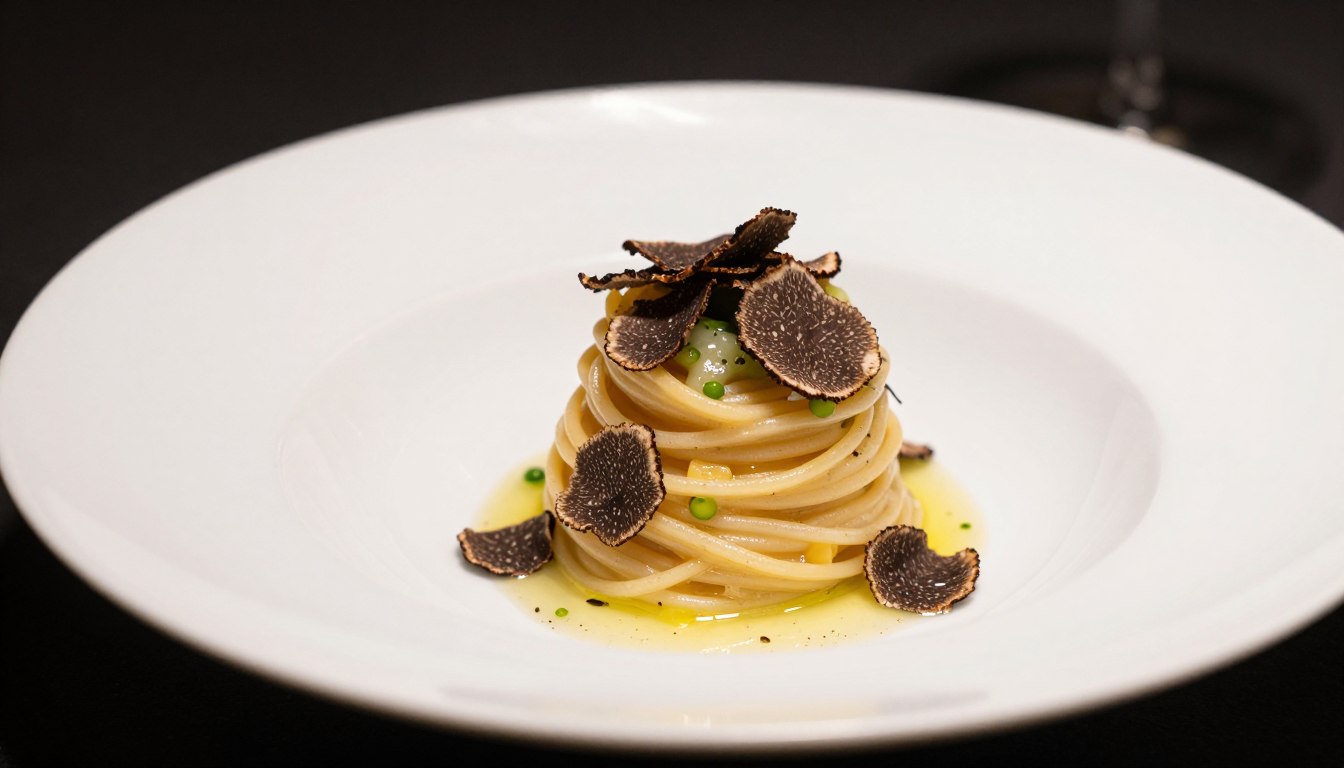
The truffle world continues to evolve: cultivation is expanding around the world and preservation technologies such as freeze‑drying make authentic truffle products available year‑round. This means cooks can enjoy true truffle character more often—on pasta, eggs or simple finishing dishes—without relying solely on seasonal fresh specimens.
Quality and authenticity remain the essentials. Choose genuine truffle products that disclose real truffle content and provenance, or seek fresh seasonal varieties when available. Try a pinch of premium truffle powder on scrambled eggs this week and experience how a small amount transforms an ordinary dish.
 Truffle Master