1. Bring a large saucepan of water to the boil. Meanwhile, finely grate the Parmesan, peel the garlic and wash and thoroughly dry the basil. Set aside a few small basil leaves for serving. Have two warm serving bowls ready.
2. Put the pine nuts in a dry frying pan over a medium-low heat. Toast for approximately 2–3 minutes, shaking the pan frequently, until lightly golden. Watch carefully, as they can burn quickly. Immediately tip onto a plate and leave to cool for a few minutes. Reserve 1 teaspoon of the toasted nuts for serving.
3. While the pine nuts cool, lightly salt the boiling water and add the penne. Stir well and cook for the time stated on the packet, until tender with a slight bite. While the pasta cooks, make the pesto as described in the next step.
4. Put the remaining cooled pine nuts and the garlic in a small food processor and pulse until finely chopped. Add the basil and Parmesan. Pour in the olive oil and pulse briefly, scraping down the sides as needed, until combined into a slightly textured paste. Avoid blending continuously, which can warm the pesto. Spoon into a large mixing bowl.
5. Just before the pasta is ready, carefully scoop out 150 ml of its cooking water into a heatproof jug. Stir 2 tablespoons of this water into the pesto. Drain the cooked pasta and immediately add it to the mixing bowl. Toss thoroughly off the heat, adding more reserved cooking water, 1 tablespoon at a time, until the pesto coats the pasta evenly without leaving a watery pool. You may not need all the water.
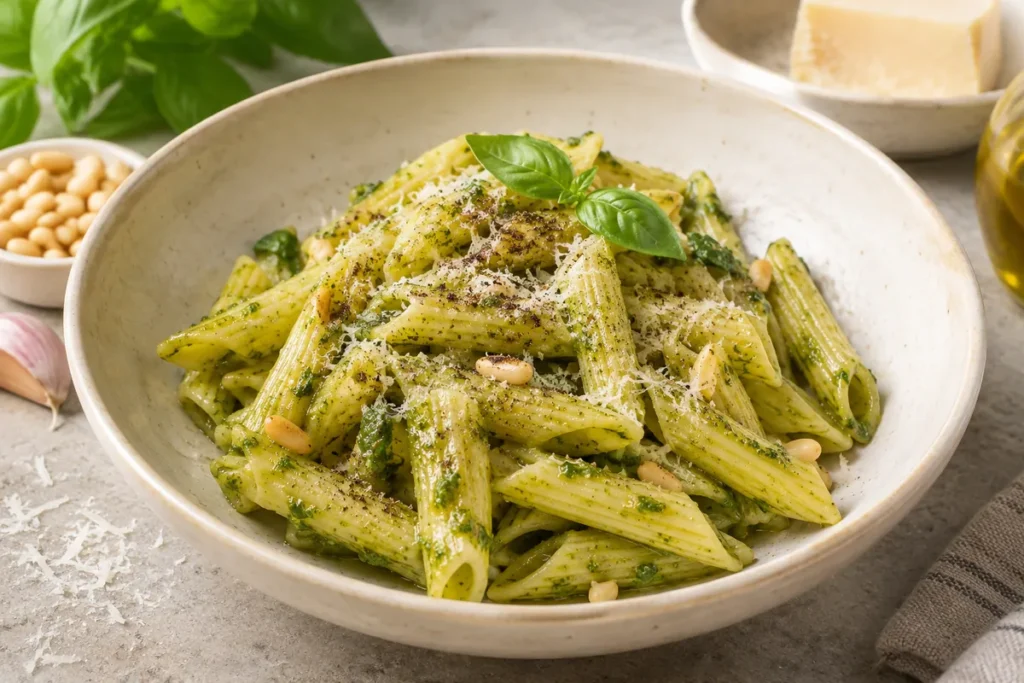
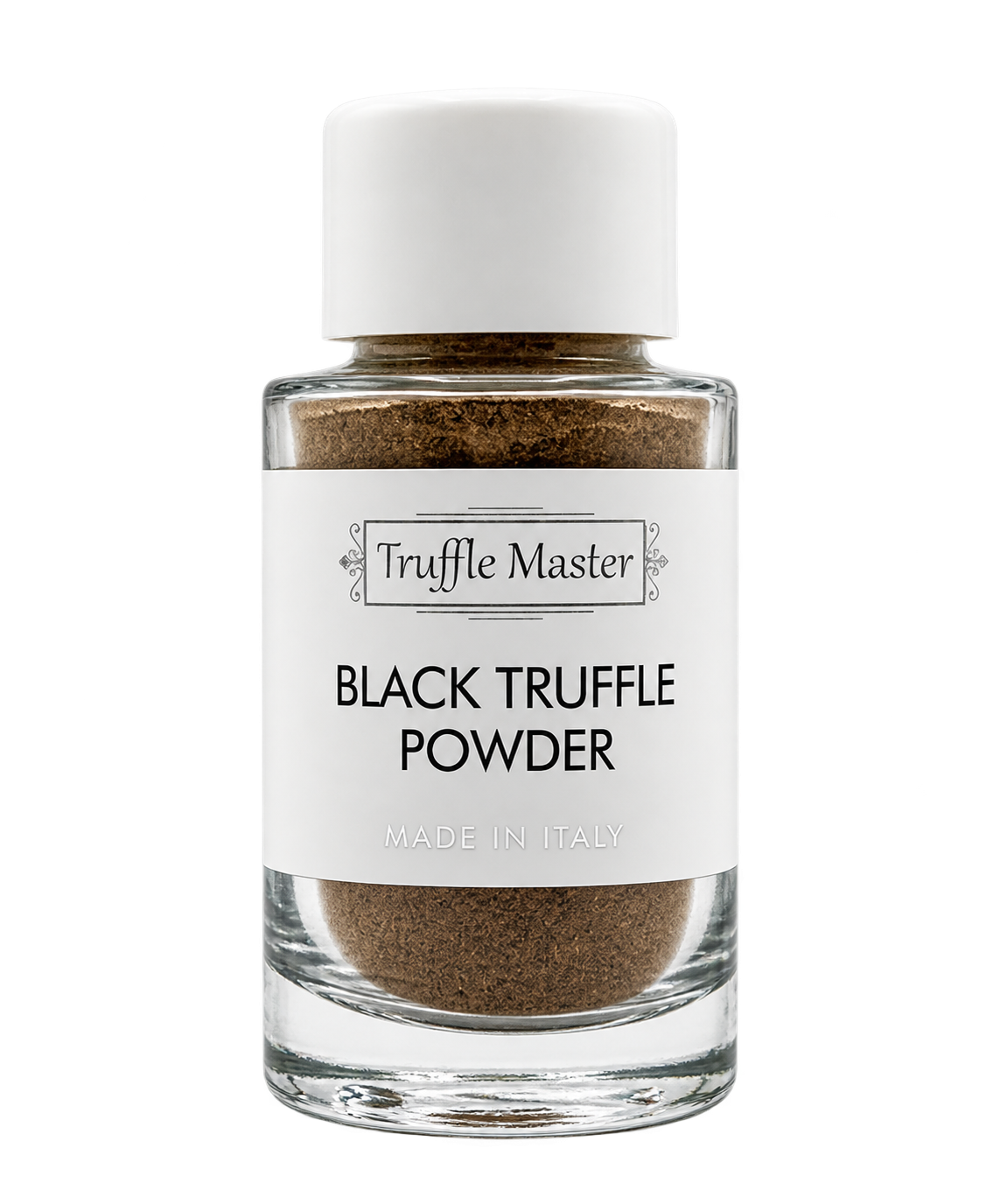
6. Taste the pasta and adjust the salt and pepper. Divide between the warm bowls and sprinkle a total of ½ teaspoon of Black Truffle Powder evenly across both portions. Taste before adding more, up to 1 teaspoon in total. Finish with the reserved pine nuts, basil leaves and a little extra Parmesan. Serve immediately.